Poetry Friday: Shhhhhhh
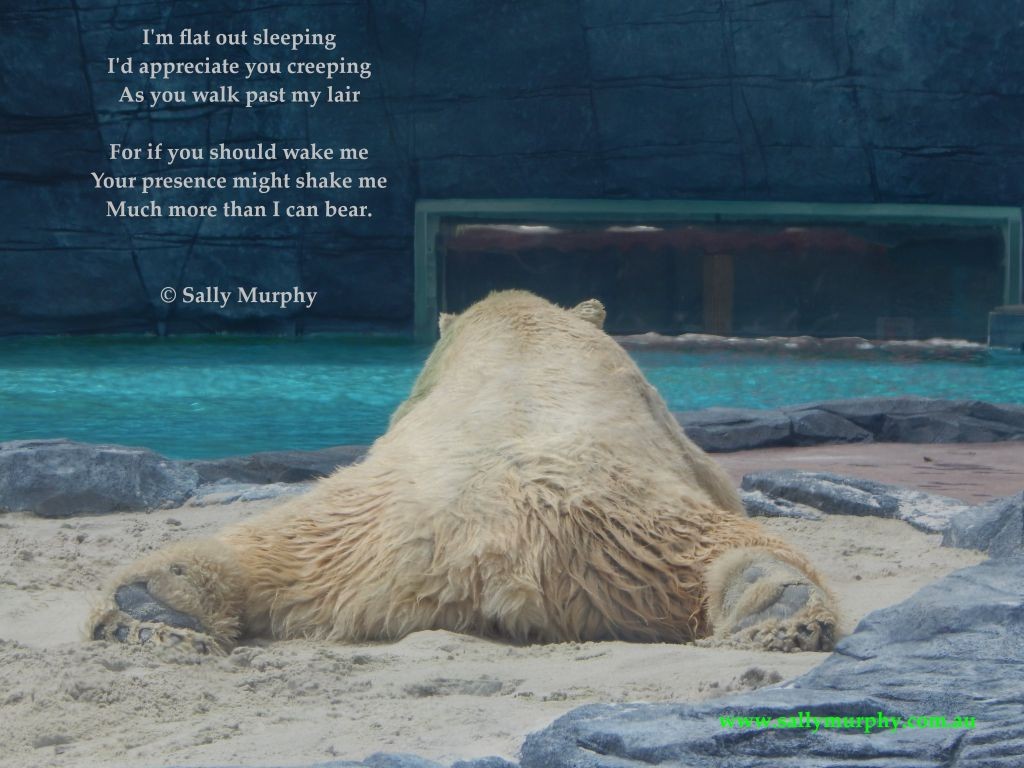
It’s Poetry Friday and I’m still thinking about my visit to Singapore, and trying to create poems to go with some of my favourite pics. One of the animals I really wanted to see at the Singapore Zoo was the polar bear – and I wasn’t disappointed. He was absolutely beautiful. Here’s my photo poem.
Have a great Friday, and don’t forget you can see what my Poetry Friday friends are doing by visiting the Poetry Friday roundup, which this week is hosted by Trica at The Miss Rumphius Effect.
Keeping a Book In Print: Some thoughts on a Book-Birthday
 This morning Facebook reminded me that six years ago I was celebrating the release of my verse novel, Toppling. Six years! In some ways it feels like yesterday. But then I think of things that have happened in my life since that particular came book out: writing wise, including having lots more published, and personally, including moving towns, becoming a grandmother, returning to university, travelling… Oh wow, only six years?
Anyway, the great thing about realising Toppling is six years old is the fact that, in spite of its age, it’s still in print (here in Australia, with Walker Books, and in the USA with Candlewick and in the UK, with the title John and Dom) .
Six years is a long time for a trade book to still be in print. Even though being in print doesn’t guarantee that it is sitting on shelves in very many brick and mortar bookstores (who change their stock regularly), it does mean that it’s available for purchase through online stores, and most bookstores will get it in when asked.
So what is it that keeps a book in print – and what part can an author play in that?
- Publishers need books to sell (just like an author does), so if copies of a book continue to sell, it is more likely to stay in print. From my perspective, this means making sure prospective readers still know about the book and where they can buy it. To do that, I blog about it, talk about at school visits and festivals, have it visible on my webpage and so on.
- Winning awards is fulfilling, but it also means the book is likely to be sought out by readers, librarians, teachers
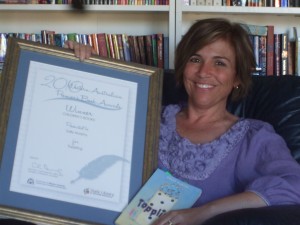
After winning the WA Premier’s Literary Awards
and parents. . A shiny sticker on the front, especially from an organisation such as the CBCA adds an implicit recommendation to the book. Which in turn leads to sales, so it is kept in print. Luckily for me, Toppling won the children’s literature category of both the Queensland and WA Premier’s Literary awards, as well as being shortlisted for the CBCA Book of the Year and other awards. From an author’s perspective, you can’t do much about winning these awards (apart from making sure your publisher nominates them) but you can spread the joyous news both at the time and in your profile for years to come.
- Timelessness or, at least, longevity of the story. A story that is all about the latest gadget, or about an event that only happens once (say, for example, this year’s Rio Olympics) may sell really well in the short term, but not so well after the event or gadget has faded away. (NB – this kinds of books are not necessarily a bad idea – just not so relevant in a post about keeping things in print). Stories that deal with issues or topics or experiences that are always relevant have a chance of appealing to readers for a long time. Toppling is about friendship and about childhood cancer, both subjects which remain current six years after the book first came out. As an author, I wish that childhood cancer would stop being relevant (because I’d like to see it wiped out of existence), but since that isn’t happening, I’m glad my book is able to tell a story which connects with readers six years down the track.
- Undated content. This is kind of similar to number 3., but is about how the story is told. Using trendy words, or
I’ve changed in the last six years so it stands to reason other things have, too.
games, or clothes, that change rapidly can make a book seem outdated very quickly. We all know (or, perhaps, like me, ARE) people who use what they think are young-people words that result in eye-roll from kids so they are so outdated. Rad? Cool? Groovy? In books there is a danger not just of putting those rapidly changing words into character’s mouths, but also using them in the text for description and narration. It could be not just the dialogue, but the latest game I have my characters play, or the television show they watch or a million other details which make the book seem ‘old’ but not historical fiction (which is another matter entirely). This is not to say a book will go out of print just because a character watches Masterchef and then Masterchef stops being televised, simply that sometimes details can date a book. So, as author, you can’t try to make a book completely devoid of small details, but you can avoid being too trendy.
- Writing other books. I mentioned that I’ve had other books come out since Toppling. Having multiple books helps to keep the older ones in print. This called a backlist. When a reader discovers your latest book and likes it, they often go looking for what else you’ve written. So, for publishers (especially if it’s the same publisher), keeping the older books in print is worthwhile. Roses are Blue, my next verse novel after Toppling, came out 4 years later, meaning that many of the young readers who read Roses had not yet read Toppling. But many of them did (and still do) go on to read Toppling, and my other, earlier verse novel, Pearl Verses the World). As an author, of course, what I can do here is to make sure I keep writing new books, and perfecting them, so they keep getting published.
Not every book will stay in print forever, and there can be lots of reasons for this. But I’m glad Toppling is still around, and I aim to do my bit to keep it in print for a bit longer yet.
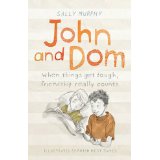
The UK Cover – same book, different tile.
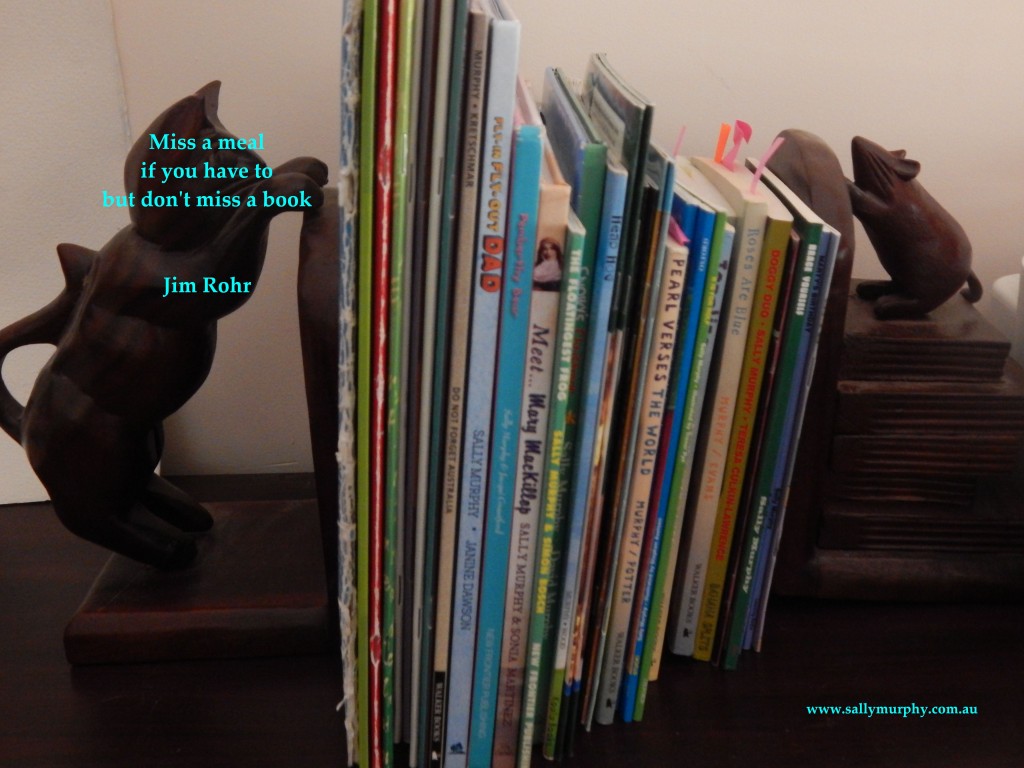
A Monday Book Quote
Poetry Friday: Hello
It’s Poetry Friday, my favourite day of the week.
Last week I was lucky enough to have a holiday in Singapore, where I spent five days seeing amazing sights, eating amazing food, doing exciting things (some involving roller-coasters) and smiling a lot.
I came home with lots of memories and about a bajillion photos. I’ve been busy sorting through these and will be sharing some here on the blog in coming weeks. Of course, if I can combine a photo with a poem, even better.
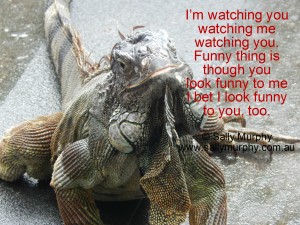
So, here’s the first, based on this beauty I met face to face at the Singapore Zoo.
Today’s Poetry Friday roundup is hosted by Catherine at Reading to the Core. Head over there to see what other poetry goodies have been shared.
Send the Bill: Why Authors Shouldn’t Work for Free
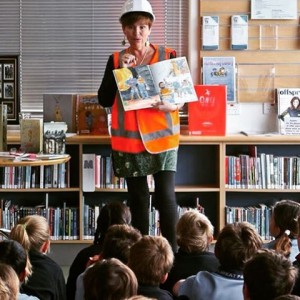
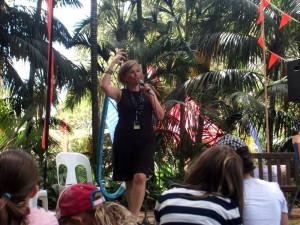
Working hard on a school visit.
Last week I blogged about why festivals should pay authors, and touched on the regularity with which authors are asked to speak for free. What I didn’t touch on is why it is important to for authors to stick together when it comes to expecting payment.
Back when I was first published, I knew nothing about ASA Rates and wasn’t even sure whether I would get paid when I was asked to speak. Luckily I had some great mentors and gathered information as I went, so I soon learnt that there were industry rates I should be charging.
Still, I used to feel really awkward bringing up the subject of payment, and even worse when it came to quoting the actually amount. It seemed like such a lot to ask for, and I knew that budgets were usually very tight, especially in schools. Now, though, I always ask for ASA Rates, and I really believe that all authors and illustrators should do the same. Here’s why:
- It’s good value. The fee covers not just the author’s attendance and presentation, but their preparation time and the years of experience they have. In my case, I’ve been writing all my life, a qualified teacher for 25 years and a published author for 19 years. When we pay a doctor/lawyer/landscape gardener, we are paying both for their time and their expertise. It’s the same for an author.
- It’s fair to other authors. If some authors charge ASA Rates and others don’t, it sets up a system of undercutting and competition, albeit unintentionally. If I charge $300 for something that Author Z charges $600 for, the organisation that has booked me will be reluctant to book Author Z. But if Z and I charge the same, then the organisation will make choices based on the author rather than the cost. Australian authors are really supportive of each other, and this is one extra way of supporting your author peers.
- The people who book you value your visit more when they are paying for it. I’ll admit I have worked for free from time to time. Sometimes it’s for a charitable cause, or to give back to an organisation (for example, speaking for free at my own children’s school) . On a couple of occasions, though, I have said yes to something unpaid because I’ve seen it might have flow on effects, like further (paid) work, or publicity attached to it. Very often, these visits are the ones where no preparation has gone into my visit – staff at a school haven’t been informed I’m coming, or there are none of my books in the library for the audience to borrow afterwards (or, for that matter before).
- The idea of a free talk being good for promoting your work is questionable. If the audience can’t buy your book straight away (such as sales on the day), the number of sales resulting from your visit will be small. Some will leave planning to buy the book, but only a few will go on to actually buy it. If your audience is children, this likelihood increases – because the adult who makes purchasing decisions hasn’t seen your talk.
- You need to make a living. If you work for free, then somewhere along the line you are going to have to do other work to pay the bills. This takes time away from your ability to write more stories. If you are paid to speak about your work it buys you time to do more work. At the same time, because it’s inspiring to interact with readers, and they will often give you feedback on what they liked about your work, your writing improves.
Having said all this, if you are going to do paid gigs, you should do so professionally: prepare what you are going to say, arrive promptly, treat audience members with respect, thank your hosts and be generally gracious. Give them value for money so they’ll book you – or another writer – again. And, when you do send that bill, take the time to thank the organiser for inviting you.
- « Previous Page
- 1
- …
- 86
- 87
- 88
- 89
- 90
- …
- 210
- Next Page »