Day 7 of my blog tour and today I am off to visit Look at That Book.
I hope to see you there.
A Verse Off of course!
A Verse Off is what happens when two authors who have books to be released within days of each other, realise there is a common link in verse. One has a novel in free verse, and the other a rhyming picture book.
‘We should get together and celebrate,’ says Kat.
‘Great idea! We could get people to write poems on our blogs’, says Sally.
‘What blog?’ says Kat ‘I’ll have to start one!’
‘They could write free verse to my blog,’ says Sally.
‘And rhyme to mine,’ says Kat.
‘Hmmm… What would we call it?’ says Sally.
‘A verse off of course,’ says Kat.
That explanation should make everything as clear as mud (that’s appropriate!) so let’s put it more simply.
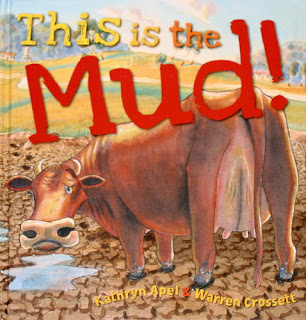
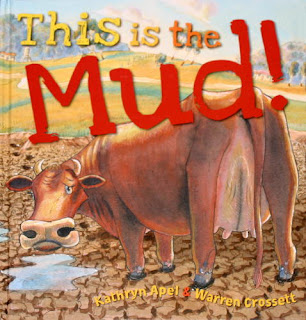
May is a dual celebration with the release of Kathryn Apel’s This is the Mud!, a humorous rhyming picture book, and Sally Murphy’s Pearl Verses the World, a free verse novel. Just look at the pretty covers:

To celebrate, we are inviting blog readers to have some fun by responding – in verse – to some prompts. You can choose your style – either free verse (unrhyming) or rhyming verse. This is your chance to prove that your preferred form is the best. So are you versed in rhyme – or free? May is your chance to find out!
Each Sunday in May we’ll post the prompt on both blogs, http://www.sallymurphy.blogspot.com/ and http://katswhiskers-thewritestuff.blogspot.com/ and invite readers to post their verse responses. If you want to respond in free verse, please post your response on Sally’s blog, and if writing in rhyme, you can post at Kathryn’s blog.
The next day – Monday – we’ll post the verses in a new post for all to see.
On Friday, 8th May we will be holding a special Verse Off – because that’s the day This is the Mud! will be launched.
Here are the rules:
1. There is no ‘right’ answer to the prompt. Be creative.
2. Limit your response to twelve lines (so there is room for everyone’s response)
3. You can respond in either free verse or rhymed verse. If you’d like to do both, post each at the appropriate blog.
4. This is your work, so add your name, and a link to your website or blog, if you’d like.
5. Everyone is a winner! But there is no winner.

Over to you. Write your response to this photo (remember twelve lines or less) and, if it is free verse, post it in the comments section below. If you’d like to respond in rhyme, head over to Kathryn’s blog. Don’t forget to add your name – and link, if you have one. And check back tomorrow to see your poem featured.
But, right here right now, I am delighted to welcome my first guest blogger for the month. Kathryn Apel is not only a fellow writer and friend, but also shares a special day with me – because yesterday, whist I was busy celebrating the release of Pearl Verses the World, Kathryn was celebrating the release of her first picture book, This is the Mud. So, it was fitting that I invite Kathryn to be my first guest blogger in this month of guests and celebrations. Over to Kathryn:
Firstly, a huge thankyou to Sally, who is not only sharing the excitement of a of a May book release, but has also invited me to share the experiences on her blog during this merry month of May. And I’m really looking forward to some poetic justice in our combined Verse Off, starting on Sunday. Check into either of our blogs for details then – because this one’s for you!
Secondly, congratulations Sally, on the release of Pearl Verses the World!!! It looks like a beautiful ‘heart’ story and I am really looking forward to adding it to my collection and savouring the story, richly told in poetic verse. I know I’ve said it before, but I have to say it here again… I love that title!! So very cryptically, cleverly done. It’s a pearl.
—–
I love writing poetry! The discipline that comes from good poetry enhances all forms of writing. After all, poetry develops the art of saying less, best.
Cinquains are beaut to start young poets off. But they hone the skills of adult writers too.
Cinquains have a few, simple rules that teach you to make every word count! Cut out needless words like ‘a’, ‘the’ and… ‘and’! Don’t repeat a word.
There are a couple of different formats for a cinquain, but this is one I like.
Line One: One noun
Line Two: Two adjectives
Line Three: Three verbs
Line Four: Four-word phrase
Line Five: A different noun
That’s right – just 11 words. But those few words create vivid pictures – often with sound effects too!
train
segmented, long
tilts, glides, toots
snaking across the country
locomotive
lorikeets
vibrant, colourful
screech, dance, quarrel
raucous, rainbow nectar collectors
parrots
(Commended in Yellow Moon, 2005)
Choose a subject and write to sharpen the reader’s perception. Play around with abstract connections then tie them together with a twist. It’s amazing how far 11 words can go.
S-Bend
sleek, white
gapes, swills, consumes
fatal fish roller coaster
pelican
(Winner in Yellow Moon, 2006)
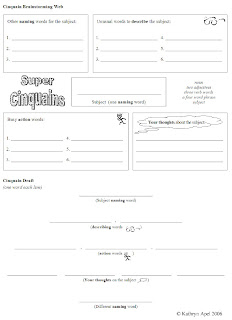
The following cinquain planning and draft sheet is one I’ve developed for classroom use. It makes students think about the subject before they start to compose the cinquain – so they have a bank of images and words to play with when it comes time to craft the poem.
>
I can’t write about poetry without talking about rhyme – especially since May is my month for Mud!
Sometimes writing rhyming poetry ties my head in knots and I feel like my skull will crack with the effort of finding the ‘perfect word’. Other times words spill out so fast that my fingers fly across the keys in a euphoric rush, and the poem literally writes itself.
This is the Mud! was one of those effortless efforts. It was written in about an hour, with very little to edit afterwards. Everything just seemed to fall into place – so much so, I was too embarrassed to show any of my usual writing buddies, because there was no skill in it.
It’s just as well I shared it with my boys, because a year later, my then six year-old chose This is the Mud! as my entry to the inaugural CYA preschool picture book manuscript competition, which it won, and from there, went on to publication. It was my first book contract. The breakthrough – at last!
Richly illustrated by Warren Crossett, This is the Mud! will be on sale in bookstores around Australia from 7th May. It is a gorgeous picture book for our Aussie kids, featuring a beautiful, beefy red cow, and loads of mud, muck, mess and mayhem!
That’s the dirt on This is the Mud! – just add water.
For a short form poetry discipline with a rhyming base, I have a lot of fun with the solage, developed by Australian poet, Cameron M. Semmens. Once again, this is great for classroom use – especially upper primary or secondary, where kids are sharp and witty.
The solage has three lines in an AAB rhyme scheme. The third line is a humorous twist on lines 1&2 – usually only one word. The solage is so short and simple, it’s a joke!
I haven’t met
the teacher’s pet…
dragon
Boys niggle.
Girls giggle –
Detention!
The recorder band
broke – then fanned;
wind
I don’t understand cricket,
with bails on the wicket –
Stumped!
The Big Cat Show
pranced in a row…
lion-dance
I hope you have some fun with these. Sharpen your pencil and your wits so you can pare back your poetry and reveal – a pearl!
Thanks Sally!
Kathryn Apel (All poems used © Kathryn Apel)
Thanks for coming, Kathryn. Follow these links to learn more about Kat.