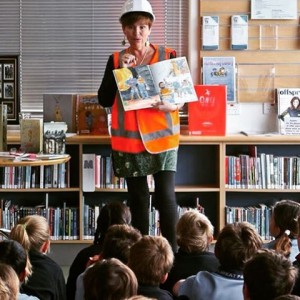
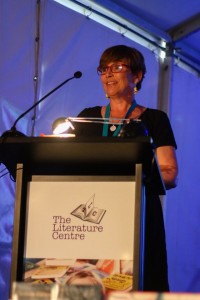
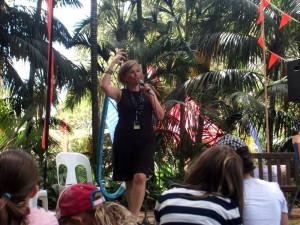
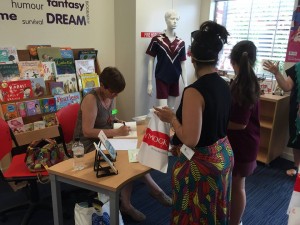
Speaking at Celebrate Reading at the wonderful Lit Centre, which always pays ASA Rates.
Yesterday I spoke about the reasons authors should be paid to speak. I spoke about why it was important for the authors to be paid, but I didn’t talk about what was in it for the people paying the authors – the festivals , schools and libraries who I’m saying should be paying authors for their time. So, here we go with why it makes sense to pay authors to speak:
- We entertain (and inform) audiences. The very popularity of literary festivals vouches for the fact that people want to meet and see and hear authors speak about their work, about life, about all kinds of things.
- When we are paid, we are more likely to go the extra mile. It makes sense, doesn’t it? If authors are being paid for their time, then they are likely to see presenting as a job, and therefor prepare well, and give generously of that time.
- Literary festivals, school author visits, library talks, dinner speeches etc etc all promote literacy and reading. In the case of children’s authors, this link is hopefully obvious – hearing from a real live author encourages children to read not just that author’s books, but more (and hopefully more and more). But this works for adults too. Hearing a good speaker read from and talk about a book leads people to read more.
- The hour long presentation is the culmination of many hours’ work. Although most festival and school sessions are an hour or less (with the exception of workshops), the fee paid to the speaker takes into account the amount of time that goes into preparing for the session as well as the years spent honing the skills used to write the book and develop speaking skills.
- Authors promote the festivals/events they speak at. Most authors use social media (Facebook, Twitter, blogs, websites) to spread the word about their appearances, drawing audience members, and spreading the word for future festivals. They also talk among themselves. A good festival experience will be shared with fellow authors socially. I have a wish list of festivals I’d love to attend based on their treatment of author friends. Payment is one part of this experience.
If you are running an event in Australia arnd are not sure what you should be paying, the Australian Society of Authors (ASA) has a detailed list of rates, which should be a great starting point. And, if you are an author, I encourage you to charge properly for your time. Again, thanks Philip Pullman for bringing this issue to the fore.


more. What a wonderful host David is.
there are 60 thousand FIFO workers in WA), but it was only when I started going into schools to talk about 

All are about absence, and missing loved ones. In
All three feature strong child characters.Tiger is only little, and struggles to understand where Dad goes, and even why they can’t always be together, but he tries to be brave about this. It’s important though, that he is able to recognise that being ‘brave’ doesn’t mean he isn’t allowed to miss his dad or to feel sad about Dad’s absences. In
All three make people cry. I spent a lot of time during Bookweek (as with all my appearances, really) discussing why I choose to write books which rouse emotion. Though I don’t set out to make people cry, I’m kind of glad that I am able to connect with people in this way. And my aim is, that even when someone cries reading one of my books, they should feel happier afterwards.