What I Read in September
Another month has flown by, and lots more reading has been done. This month I got through 25 books, everything from gorgeous new picture books (I only count ones which I have read AND reviewed for this monthly list) to an book called The 5 Second Rule, from Mel Robbins, a leading motivational speaker in the United States (and internationally). I can see why her book and her presentations – on Youtube and in-person are so popular. She has inspired me to get out of bed earlier and get stuff done this month. So thanks Mel – after reading the book, I even visited the dentist, which I’d put off for years.
Anyway, here’s what I read this month.
Picture Books

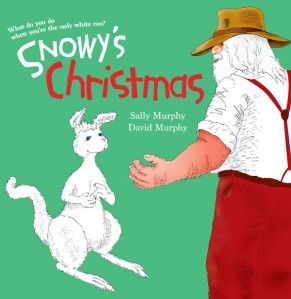
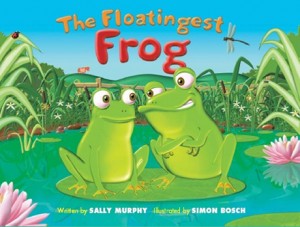
One of the Murphling grandbabies loved this one.
Nanna’s Button Tin, by Dianne Wolfer & Heather Potter
Pea Pod Lullaby, by Glenda Millard & Stephen Michael King
My Meerkat Mum, by Ruth Paul
Boy, by Phil Cummings & Shane Devries
The Cat Wants Cuddles, by P. Crumble & Lucinda Gifford
The Very Cranky Bear, by Nick Bland
I Want to Be in a Book, by Narelle Oliver
Younger Readers
Polly & Buster: The Wayward Witch & the Feelings Monster, by Sally Rippin
Chook Doolan: On the Road, by James Roy
Chook Doolan: Un-happy Camper, by James Roy
Chook Doolan: Up and Away, by James Roy
Chook Doolan: Let’s Do Diwali, by James Roy
Twin Trouble, by Jacqueline Wilson
Blossom, by Tamsin Janu
Miniwings: Glitterwing’s Book Week Blunder, by Sally Sutton
Miniwings: Whizz’s Internet Oopsie, by Sally Sutton
Charlie and the Karaoke Cockroaches, by Alan Brough
You Just Wait: A Poetry Friday Power Book, by Sylvia Vardell & Janet Wong
The Beach Shack Cafe, by Belinda Murrell
Young Adult
Bro, by Helen Chebatte
Nothing, by Annie Barrows
My Lovely Frankie, by Judith Clarke
Losing It, by Julia Lawrinson
Adult
The 5 Second Rule, by Mel Robbins
The Story of Our Life, by Shari Lo
Have a great October. Two months till summer!
Two Panels, and Five Panelling Tips
I was lucky enough to be part of two panel sessions in the past month. First, I was on a panel discussing writing children’s poetry at the Queensland Poetry Festival and, more recently, I was part of a panel discussing empathy in fiction as part of Research Week at Edith Cowan University.
I love speaking about books and writing and while I absolutely love talking about my own books, the opportunity to be on a panel offers a different opportunity, which I love. While both panels allowed me to apply my own work and experience to the topics at hand, they also offered the opportunity to learn and consider how other people work, and particularly how other writers, sometimes working in different genres or for different audiences, approach similar challenges.
In Queensland, I the panel consisted of myself, June Perkins (who also convened the panel), and JR Poulter – all of us children’s poets who write in other genres as well – and chair Dr Virginia Lowe, a children’s literature expert. We discussed topics including how children’s poetry differs from that written for adults, why poetry is important, and our own writing processes. This was followed by a reading session, where we each shared from our own work, as well as questions from the audience (including both adults and children).
In Bunbury, the panel consisted of myself, Dr Vahri McKenzie (a creative arts academic and writer, and also the supervisor of my recent PhD studies) and Lesley Thiele (a fabulous up and coming writer, whose short fiction has had much success) , and chair Narelle De Boer, a PhD candidate and lecturer in the creative arts. We each read from recent works, and discussed the topic of empathy and how we develop it in our writing, as well as answering lots of thought provoking questions on a range of topics from the audience. For me, this was a different opportunity because I was the only panelist who specialises in writing for children, so it was interesting to be able to see (and demonstrate to the audience) similarities and differences in the way we work.
Although the two panels were quite different, they both ran well, I think because of the strength of the organisation behind them. Although I can’t take credit for that, my observations of how to make a panel work might come in handy if you are appearing on one yourself – or planning one for a literary event:
- A strong, passionate, moderator is essential. Both Virginia and Narelle knew their stuff, had lots to contribute, and kept the conversation going.
- Diversity of panellists makes for interest. Unusually, both panels I was on were all female, but we came from a range of backgrounds, and had different publishing, professional and personal experiences. If panellists match too closely there may not be enough to discuss – too much “me too-ing”. This wasn’t a problem on either panel I was on.
- Promote the event to ensure you have an audience. Neither panel had a huge audience, being niche events, but the people who were there were there because they were keen to hear what we had to say. Some had come through word of mouth, others through social media links. Neither session had a big advertising budget, but enthusiastic sharing drew people in.
- Don’t over prepare. Let the conversation flow depending on interactions of the panellists and according to audience input. Both panels seemed to flow organically, although there was good ground work laid before the event to ensure we knew what we would/could discuss.
- Lastly, try to relax and enjoy it. Sometimes things go wrong – sound systems don’t work, IT seems like it won’t function, you forget to make a point – but generally, the audience doesn’t notice. And if they do, they are very forgiving. Remember, they are there because they are interested in what you have to say: not because they want to judge you.
If you have any tips for successful panels, leave a comment. I’d love to hear what works for you!
Bookmonth Wrap-up
I wanted to sit and write a post about all the awesome schools and libraries I visited during August, and into September, for Bookweek – which actually stretches over the whole month. But somehow, my post turned into a poem, which I hope captures what I do and why I do what I do. So here it is:
A Book Week Poem
Bookweek comes but once a year
Visiting schools both far and near
To tell the world that’s reading’s fun
And spread the joy to every one.
I read my books and talk a lot
Answer questions on the spot
Laugh and cry and laugh some more
And meet young readers by the score.
Give clues for writing for keen minds
And share some favourite literary finds
Not minding (too much) early morns
Leaving home before day dawns
And driving driving to get where
I need to be to chat and share
Or flights that take me far from home
I love to travel and to roam.
My voice struggles to get through
But lozenges and water too
Keep me going every day
To say the things I want to say.
And as one week stretches to four
And back and eyes and feet grow sore
I still feel pumped by what I do
And draw such energy from you
The readers who I get to meet
On this awesome Bookmonth beat.
Thanks to every school and library which hosted me over August, and into September. And a special thanks to the hundreds of young readers who engaged so enthusiastically in my sessions.

I love my job!
Attack! Attack! Do you know the symptoms of a heart attack?
This post is not about books or writing, but it IS about a topic very important to me right now, and which I want everyone to know about.
See, this week, I almost lost someone very dear to me, to a heart attack. Before I continue, I’ll let you know that she is fine. After an angiogram and the insertion of two stents to remove blockages and maintain blood flow, she is at home and in reasonable health.
But she nearly wasn’t. And that’s why I’m writing this post – with her permission.
Because my amazing mother-in-law, who has worked most of her life as a healthcare professional, didn’t recognise the symptoms of a heart attack, and as a result delayed taking action.
She’d had a few health issues this year, and had seen a cardiologist as well as her GP, and had a stress test and other investigations. Then she had felt off-colour for the last few weeks and so on Monday she booked an appointment to see her GP – whose first available appointment was Wednesday. No rush, so that was fine.
On Wednesday, she got up and went about life as normal. But after she’d pegged a load of washing on the back line, she felt a slight chest pain and a little bit of pressure. Nothing major, and she wondered if it might be some muscle soreness from the repetitive action of reaching up to the line.
Back inside, she felt a little light headed and breathless, but she’d had this before, so she sat down for a few minutes to let it pass, then got ready to go to her doctor’s appointment. While she was getting ready she had a few small pains up the side of her neck, and into her jaw and ear – but again, nothing major.
As she was leaving home to go to her appointment, my father in law arrived home, and offered to go with her, but she thought she was fine, and the surgery was only a few minutes’ drive away. So she drove herself, noticing though that now she had a bit of pain in her right arm.
At this point she started to wonder if something more sinister was happening. She parked at the surgery, went in and took a seat to wait for the doctor. Although she broke out in a sweat, she waited her turn. When she was called she went into the room, and asked the doctor if she wanted to hear what had led her to book the appointment, or about what was happening today. The doctor suggested she start with today.
When she explained how she felt, the doctor sprung into action and called an ambulance, recognising instantly that her patient was experiencing a ‘cardiac incident’ (ie a heart attack).
The rest, of course, is a good story: she got promptly to an emergency department where they were able to assess and stabilise her, before she had an angiogram next day and two stents inserted. And, as I said, was then released home to resume life.
BUT if she had not have that GP appointment booked, the result could have been a whole lot worse, because at home she may have waited longer before calling an ambulance. The reason: each symptom was isolated, and none seemed as dramatic or major as she had expected a heart attack to be. And, as I said, she was a nurse and midwife for many many years.
So, here are my questions:
Do YOU know the symptoms of a heart attack?
Do YOU know that they may be different for women, and that women are generally slower to get help?
Do YOU know what to do if you are experiencing a heart attack?
Do YOU know what to do if someone near you seems to be having a heart attack?
If not, and even if you think you do, please take a few moments to read up on heart attack symptoms.
Here’s a link to the Heart Foundation’s site, which is an easy, straightforward read. Know the signs, and know when and how to take action. Please.
And please, feel free to share this story. Widely. The more people know, the more ‘lucky’ stories of survival there will be. As the Heart Foundation says – don’t be scared of calling for help in case you are wrong.
Love to you all, and thanks in advance for sharing. Oh, and hug the people you love.
What I Read in August
Although August was a super busy month I managed to read 21 books. Actually, it was the busyness which helped reach this total, as several of this months reads were audio books – including The 10PM Question by Kate De Goldi, which had me sobbing as I drove. I love to listen to books as I drive, and with many hours spent travelling for Bookweek gigs, it was a perfect time to read some treasures I hadn’t previously read. I also managed to read three books in airports and on planes as I travelled to Brisbane and Townsville.
So, here’s my list for August. Would love to hear what you’ve been reading, or if you’ve read any of these. As always, if I’ve reviewed them, the link is to the review.
Picture Books
Through the Gate, by Sally Fawcett
I’m Australian Too, by Mem Fox and Ronojoy Ghosh
Say Yes, by Jennifer Castles & Paul Seden
Younger Readers
The 10PM Question, by Kate De Goldi
The Year My Life Broke, by John Marsden
Our Race for Reconciliation, by Anita Heiss
Super Con-Nerd, by Oliver Phommavanh
Young Adult
The Incredible Adventures of Cinnamon Girl, by Melissa Keil
So Much to Tell You, by John Marsden
Finding Nevo, by Nevo Zisin
The Underdog, by Markus Zusak
More Than This, by Patrick Ness
Hold My Hand – Or Else, by Margaret Clark
Adult
The Engagement, by Chloe Hooper
The Merry-Go-Round In the Sea, by Randolph Stow
Troubadour, by Isolde Martyn
Girl In Between, by Anna Daniels
The Scent of You, by Maggie Alderson
The Happiness Advantage, by Shawn Achor
Ache, by Eliza Henry Jones
Forgotten, by Nicole Trope
- « Previous Page
- 1
- …
- 58
- 59
- 60
- 61
- 62
- …
- 209
- Next Page »