It is April, the year is whizzing by (seems to happen every year!) and it is time to look at what I read in March. Nine books this month, as diverse as ever – from a picturebook to a lengthy tome about trauma. The books I have been recommending to others – Minds Went Walking and Dirty Laundry (see below), for quite different reasons.
Anyway, here’s what I read:
Books for Young Readers
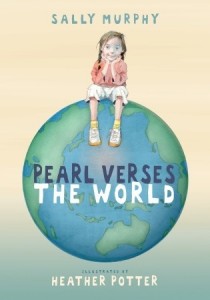
1.  Senor Pilich the Monastery Cat, by Fr. Anscar McPhee OSB (Network Books, 2006). This is a funny little book that I suspect was given to my offspring at some point and has sat on my shelf unloved for a long time. Now I’ve read it, and given it the attention it needed. Told from the perspective of a cat who apprehends a criminal in the New Norcia Monastery. I have my own book coming out in June which is partly told from the perspective of a cat (Queen Narelle) so it’s lovely to read another one.
2. The Cockatoo Wars (Tales From the Bush Mob), by Helen Milroy (Magabala Books, 2023). I was lucky enough to hear the author talk about this book at the recent CBCA (WA) Night With Our Stars, and, of course, just had to buy a copy, which I look forward to haring with my grandies as well as with my students at university. The tale of two wise mother cockatoos, and their babies – one black and one white – who withdraw from their clans’ ongoing battles and live harmoniously. It becomes up to them to work together to stop a bush fire and restore harmony to the bush.
3. Frank in Time, by Rod Clement (Angus & Robertson, 1998). I picked this up on my local library remainder trolley for $1. There probably should be a law against having remainder trolleys right where I have to walk past them – this wasn’t the only book I bought, but it is the one that caught my eye and made me stop and browse. I really like Rod Clement’s illustration style and this humorous take on history involves the young protagonist and his dog (Frank) taking a trip to the museum and comparing the past with today. In each illustration, Frank is either part of the history, or up to some mischief.
4. Fog A Dox, by Bruce Pascoe (Magabala, 2012). Last year I realised there were some gaps in y reading of notable titles by First nations writers, and I set about trying to rectify this. I am unsure why I hadn’t read this book, because I certainly knew about it and admire Pascoe’s other works. I adore this book and am glad I now own it – a story of unusual friendships, kindness and respect.
Books for Adults
-
Minds Went Walking: Paul Kelly’s Songs Reimagined, curated by Jock Serong, Mark Smith & Neil A. White (Fremantle Press, 2022). I’ve had this one for a little while but glad it finally rose to the top of the pile, even though it has left me singing Paul Kelly songs everywhere I go. Not a bad thing really. Each contributor has been inspired by a single Kelly song, writing about their own experiences with the song, or a creative response to the song, making each contribution unique.
Someone Else’s Shoes, by Jojo Moyes (Penguin Books, 2023). I listened to the audio version of this, expecting it be light and fluffy. And it was certainly light in places, but was really a story of sisterhood between women and I found myself cheering them on. A good driving story.
Not Now, Not Ever: Ten Years On From the Misogyny Speech, edited by Julia Gillard (Vintage, 2022). I started reading this on International Women’s Day, which was a good time to do it. I laughed, I cried, I got angry and I thought A LOT.
Dirty Laundry: Why adults with ADHD are so ashamed and what we can do to help , by Richard Pink and Roxanne Emery. I listened to this on Audible, but will be buying the print copy if I can find it in Australia. Written by a couple who are also, apparently, Tiktok famous for their videos about living with ADHD, I found this easy to listen to, and enjoyed hearing about ADHD from the perspective of a woman who lives with it and her husband. Really useful insights, and a lot I could relate to.
The Body Keeps the Score: Mind, Brain and Body in the Transformation of Trauma
(Penguin, 2014). Fairly heavy going because it is about how trauma impacts both the mind and the body, and discusses case histories, therapies and more, mostly from the viewpoint of the therapeutic practitioner. Sometimes though, hard is worthwhile, and I found these insights both informative and useful.
Total for the year to date is 32. I’d love to hear what you’ve been reading.
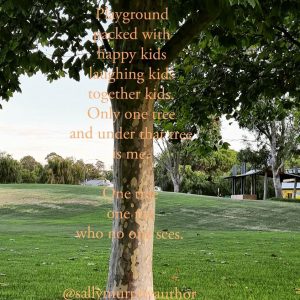
 I pointed to Pearl, in her group of one under a tree. And, as I did so, I noticed the book on the ground next to her. And felt a little jolt of recognition.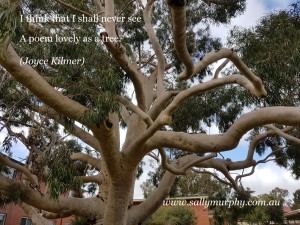
 with actually sharing some examples of sad poetry. The two examples that I’m recommending are firstly from
 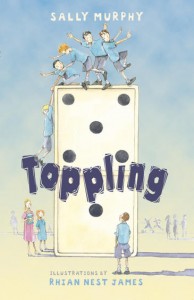 Next, read the second text – from
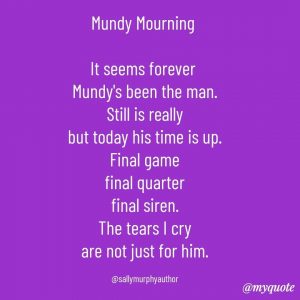
 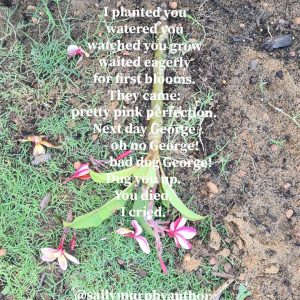 days For context I did also afterwards share some of the back story on the frangipani poem because I felt that the missing piece of that puzzle was that why I was so sad wasn’t just about the tree – it was also that that tree marked the burial spot of my previous dog. And the Mundy poem is about David Mundy’s last game. I started by thin