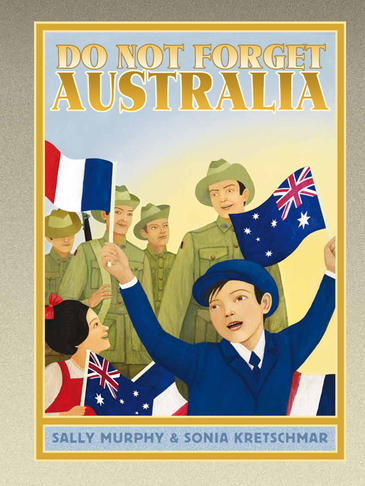
Just dropping in briefly to say that today I’m busy answering questions over at Kerri Lane’s blog and would love to see you there. There are also copies of Do NotForget Australia to be won!
Have a great day.
Just dropping in briefly to say that today I’m busy answering questions over at Kerri Lane’s blog and would love to see you there. There are also copies of Do NotForget Australia to be won!
Have a great day.
Two months into the National Year of Reading, means two months down in my attempt to read 366 books this year. That means it must also be time for an update.
So 31 days in January, 29 days in February means, by now, I should have read 60 books. And guess what – that’s exactly where I’m at! On target to get to 366 books. These are the books I read in February:
| 34 | Come Down, Cat | Sonya Hartnett | Penguin | Picture Book |
| 35 | The Outcasts | John Flanagan | Random House | Young Adult |
| 36 | Quinn’s Riddles | Aleesah Darlison | Walker | Children’s |
| 37 | Willow’s Challenge | Aleesah Darlison | Walker | Children’s |
| 38 | Krystal’s Choice | Aleesah Darlison | Walker | Children’s |
| 39 | Ellabeth’s Test | Aleesah Darlison | Walker | Children’s |
| 40 | The Secret Signal | Simon Haynes | Bowman | Children’s |
| 41 | Poetry Matters | Ralph Fletcher | Harper Trophy | Non Fiction – Writing |
| 42 | HipsterMattic | Matt Granfield | Allen & Unwin | Non Fiction |
| 43 | Darius Bell & the Crystal Bees | Odo Hirsch | Allen & Unwin | Children’s |
| 44 | The Coming of the Whirlpool | Andrew McGahan | Allen & Unwin | Young Adult |
| 45 | Sam, Grace and the Shipwreck | Michelle Gillespie | Fremantle Press | Picture Book |
| 46 | The Bicyle | Colin Thompson | ABC Books | Picture Book |
| 47 | Tin Toys | Bruce Whatley | Random House | Picture Book |
| 48 | The Jewel Fish of Karnak | Graeme Base | Penguin | Picture Book |
| 49 | A Bus Called Heaven | Bob Graham | Walker | Picture Book |
| 50 | Vampyre | Margaret Wild | Walker | Picture Book |
| 51 | Desert Boys | Peter Rees | Allen & Unwin | Non Fiction |
| 52 | The Flying Emu | Sally Morgan | Walker | Children’s |
| 53 | Foal’s Bread | Gillian Mears | Allen & Unwin | Adult |
| 54 | The Carousel | Ursula Dubosarsky | Viking | Picture Book |
| 55 | Assault | Brian Falkner | Walker | Young Adult |
| 56 | The Red House Mystery | AA Milne | Adult | |
| 57 | Matilda is Missing | Caroline Overington | Bantam | Adult |
| 58 | Bom! Went the Bear | Nicki Greenberg | Allen & Unwin | Picture Book |
| 59 | Rudie Nudie | Emma Quay | ABC Books | Picture Book |
| 60 | Equinox | Lara Morgan | Walker | Young Adult |
If you are quick to count you might notice that although I’m up to 60, I actually started the month ahead, and so didn’t quite read a book a day during February. There are a couple of reasons for this, to do with school going back, writing commitments and speaking engagements. But there are also some books which need more than one day to read. For example, Peter Rees’ Desert Boys took almost a week to get through – which was well worth the effort, although it took me close to not meeting my quota for the month
As with January, I’ve linked the titles above to the reviews of the books, where I’ve reviewed them. If there is no link it means I haven’t reviewed the book – most probably because it isn’t Australian (in January there were some Australian books which I didn’t review because I was sending them to Claire to review instead).
A new month started today – that’s another 31 books to get read! I look forward to keeping you updated with my progress.
I hope you’re still celebrating the National Year of Reading.
Happy happy day! I am really thrilled, excited, delighted, happy and ecstatic to announce that today marks the release of my new book baby, Do Not Forget Australia, published by Walker Books and illustrated by the extraordinarily talented Sonia Kretchsmar.
I was lucky enough to speak at the Perth Writer’s Festival on the weekend, and got the chance to share Do Not Forget Australia with people there. You can see just how happy I am about the book!
To celebrate the new release, I am off on a blog tour over the next couple of weeks. I will be visiting lots of different blogs to talk about the book, where the idea for it came from, how I wrote it, and more. Sonia will also be talking about her own role.
The tour starts today at the blog of my lovely friend Claire Saxby. I am so happy to start the tour there and to talk about friends, because this is a story about friendship, and it is fitting that I start the tour on such a wonderful friend’s blog. The rest of the tour will visit the following blogs:
|
1st March 2012
|
|
|
2nd March 2012
|
|
|
3rd March 2012
|
|
|
4th march 2012
|
|
|
5th March 2012
|
|
|
6th March 2012
|
|
|
7th March 2012
|
|
|
8th March 2012
|
|
|
12th March 2012
|
|
|
12th March 2012
|
|
|
13th March 2012
|
|
|
14th March 2012
|
I do hope you’ll enjoy reading about the little school in France that inspired this story.
Now I’m popping the cyberbubbly. Here’s cheers to good friends, and to new books.

Have a great day!
Time for Meg, Anna and I to once again ruminate on a single topic across our three different blogs. If you’ve been hiding under a rock these past three weeks – or just simply haven’t had time to check out our blogs – each week we’ve been each blogging on our individual blogs on the same topic, and then discussing the similarities and differences in our approaches.
Today’s topic is, quite fittingly, being shortlisted or otherwise recognised in awards lists. I say it’s quite fitting because, as it happens, the three of us were all on the same shortlist last year – the Younger Readers shortlist of the CBCA Children’s Book of the Year Awards, 2011.
I’ve been pretty fortunate when it comes to shortlistings and awards, these past few years. Pearl Verses the World won the children’s category of the Indie Book Award, 2009, was an Honour Book in the 2010 CBCA Awards, Best Book of the Year for Upper Primary in the Speech Pathologist Awards, Winner of the Young Readers Category of the Family Therapist’s Award and was shortlisted for the Queensland Premier’s Literary Awards, the WA Premier’s Literary Awards. Toppling, as well as the CBCA Shortlisting won the Children’s Book Category of both the Queensland Premier’s Literary Awards and the WA Premier’s Literary Awards, as well as being an Honour Book in the KOALA Books, and shortlisted for others.
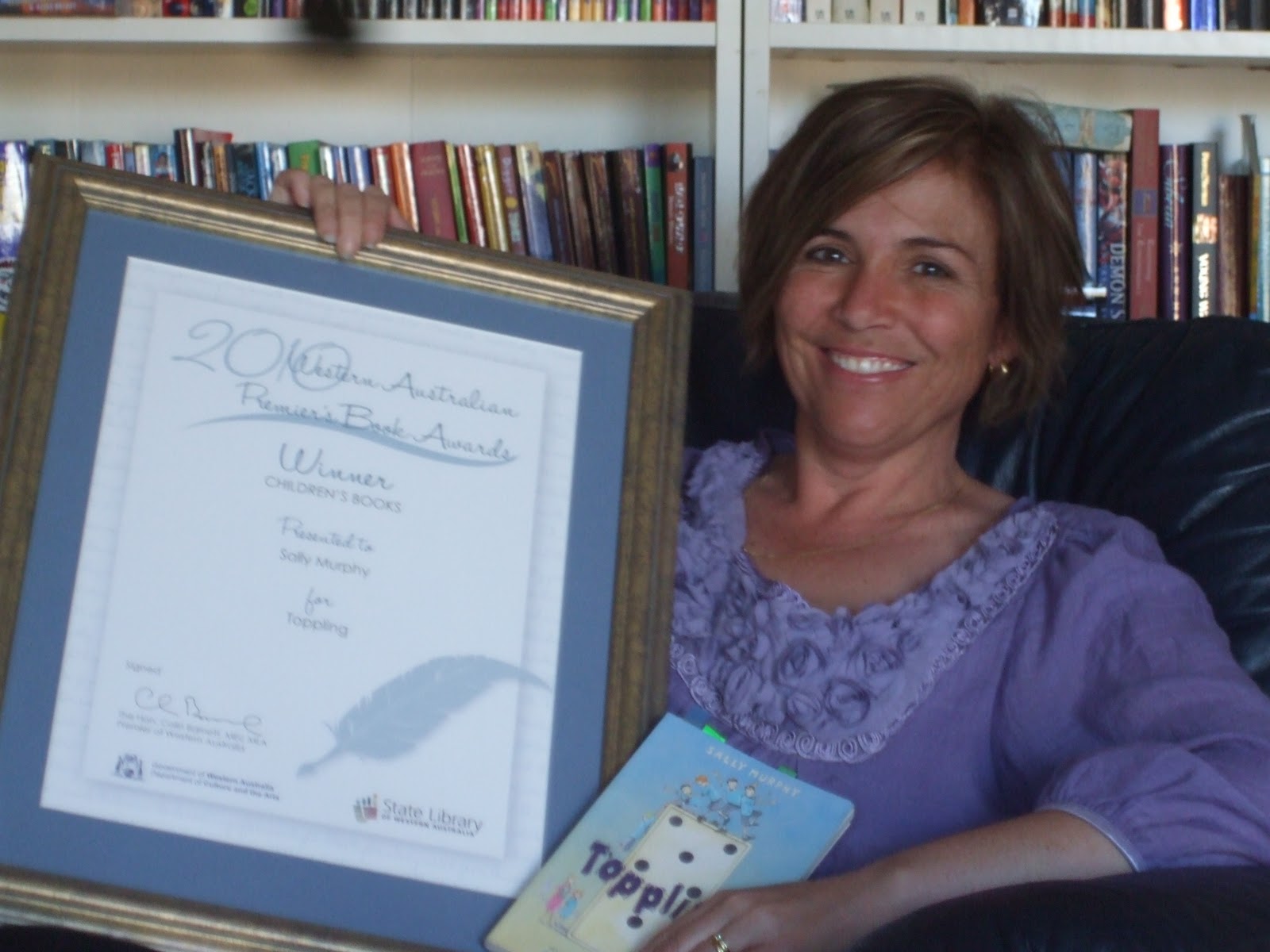
So, it’s been a pretty exciting couple of years. Prior to Pearl‘s release none of my other books had ever won anything, let alone been shortlisted. So when I got the call for my first ever shortlisting I was pretty chuffed. That’s an understatement. I was sworn to secrecy at the time, and I was at work, so I did a mad happy dance around the office but then couldn’t spill the beans on what was so exciting. And each subsequent bit of recognition has had a similar response. I dance, I drink champagne, I ring and email family and friends, and I smile a lot.
But why? What’s so good about being shortlisted? Is it just an ego trip for the author?
You bet ya. It’s all about me, me meeeeeeee! Look at me I shout, look at MEEEEEEEEEEEEEE.
Nah, just kidding. The reality is that individually those shortlistings have not made me rich or famous. But each shortlisting is a sign that a group of judges have chosen my book from amongst the hundreds of books published each year and said there is something special about it. It is recommended for readers. A shortlist is usually the top five or six books in the category, so to be on that list means the judges think your book is one of the top six of its kind. For me, that is a huge confidence boost. As a writer, I work mostly in isolation and I spend a lot of time wondering what I write w is any good. Being shortlisted, or winning an award, says to me that I’m doing okay, and it keeps me going doing what I’m doing.
 Then there’s the publicity. Being recognised (I’ll use this term because it kind of covers both shortlisting and winning) can attract publicity to a book which, in turn, can boost sales. This is especially true for the CBCA Awards, because these are the main children’s book awards in Australia. If a book is on the shortlist, most schools and public libraries will buy one or more copies. This is a huge boost to sales figures. And bookshops which have not previously stocked the book are more likely to do it. I’d like to say this true for all awards, but the publicity for other awards does vary. for example, the WA Premier’s Book Awards last year rated only a small article in its home state newspaper. Without the publicity there is not always a flow on effect for book sales.
There’s also, sometimes, a cash prize, generally only for the winning book, though some awards (such as the Prime Minister’s Literary Awards) do award cash to the short listed authors. Cash prizes can vary from a few hundred to thousands – and, either way, this cash is very welcome. Being able to make a full time income from writing, especially for children, is pretty rare. So a cash prize can mean the ability to take time away from a day job to write more, or it can simply mean food on the table. For myself, the first significant cash prize I won helped with the deposit on our family home, and the second paid for a break from teaching. No flash cars or holidays, but rather a really welcome financial relief.
In my writing area (which is a corner in the lounge room) I have a wall for my various certificates. My beloved has taken the time to hang them neatly and to rearrange them when others have come in. Sometimes this wall is what keeps me writing. When a rejection comes in, or sales figures aren’t what I’d hoped, or just when I read yesterday’s writing and wonder whether it’s good enough, I sit back in my chair and the first thing I see is that wall and it reminds me that I can do it. There are people out there who do like my books. Especially validating are the awards that have come from young readers, which mean that kids (the very readers I hope to reach) like what I’m writing.
So, what’s it like to be recognised with a shortlisting or award? Fantabulous! Do I write to win prizes? No. I write because I love writing, crafting stories, and sharing them with the world. Being recognised for it is just a bonus.
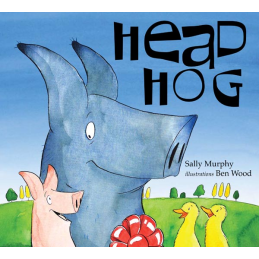
I still smile whenever I see the cover of Head Hog which, if you haven’t been following here, was released late last year. Illustrator Ben Wood did a fabulous job of the illustrations and the finished product is very cute.
If you’ve not yet had a chance to read the book, this could your lucky week, because all this week, Kids Book Review (KBR) are running a giveaway. All you have to do is visit their site and explain why it’s important to have fun.
Go on, enter. You know you want to!
Last week, I got together with the awesome Meg McKinlay and Anna Branford to discuss what it was like to be reviewed. This week we’re doing the same thing – three of us posting on the same topic each on our blogs – except on a different topic. This week’s topic is what it’s like to be edited.
I’m going to say two things at the outset. One is that for many aspiring writers, the term editing is often confused/used interchangeably with proofreading or copy editing. Editing is not the same as either of these, especially proofreading. Editing has nothing (or almost nothing) to do with fixing up spelling mistakes, looking for punctuation errors or swapping the odd word with something better. Editing is taking a manuscript which is acceptable and making it sensational. It is the process of making a manuscript into a book. The finished book that you hold in your hands has been (or should have been) edited multiple times – by the author prior to being submitted and then again in consultation with an editor. Yes, spelling and punctuation will be fixed along the way, but more importantly the structure of the book, the layers of plot, the strength of the characterisation, the flow of the dialogue – and more -are worked on during the editing process.
The second thing I’ll say about editing is that it scares me. A lot. I rarely have any problems getting a story down in first draft form. But I struggle with myself over the editing process. I second guess myself over what to take out, what to leave in and what to develop. In the process I go through cycles of swinging between thinking my story is crap, to thinking its sheer genius, and back again. Editing my own work is tough – but necessary.
And then when, finally, I get the courage to submit,and if the story is miraculously accepted for publication, I have to do it all again. But first, there’s the good bit. I submit the story. I wait (and wait and wait and await – response times can be verrrrrrrry slow) and then,presuming its not a rejection (another very sad story), I get a phone call or email saying something like: “Dear Sally, We at Patty’s Publishing House (can you tell I made that bit up) are thrilled to be able to offer publication of your novel ‘Sally’s Super Story’ (and that?). This touching story of life and all its meanings is sure to touch the hearts of readers of all ages, and we look forward to publishing it”.
So I happy dance, and celebrate, and sign the contract and celebrate some more. After all, the publishers LOVE my book. The hard work is done. Right?
Wrong! Because then comes the phone call or email from THE EDITOR. The editor begins with the good stuff. “Hi Sally, This is Ethel the Editor here, and I’m just so delighted that I’m going to be working with you on ‘Sally’s Super Story’. I have to tell you it’s just one of the loveliest things I’ve read all year. We at Patty’s are so excited about this one.” Once I’m well buttered up and delighted that Ethel loves my book, she goes in for the kill. “Now, the manuscript doesn’t need too much work, just a bit of tidying up. I’ll send you a copy with some queries and suggestions. In the meantime, how do you feel about…” At this point Ethel will launch into a list of suggestions/problems/requests all of which she is sure “won’t be too much trouble for a talented writer such as yourself”. And, of course, because I am who I am, the only response I give is along the lines of “yes mam”, “sure” and “I’ll get right onto it.
But then I hang up the phone, open the email attachment, read it and weep. And self-doubt comes, not just knocking, but bashing at my door. How on earth am I going to do all these rewrites, make these changes and get it up to Ethel’s lofty standards? Doesn’t she know my limitations? Has she read my other books?The manuscript was as good as I could get it before I submitted . How does she expect me to make it better?
After that, I get cross. What does she mean, she doesn’t like my dialogue? So what if my German backpacker seems to speak like a leprechaun? Plot is weak? It’s not about the plot – this is a mood piece. Thinks my main character is insipid? She’s just gentle. And so it goes.
After cross, I go back to self doubt. And give up writing permanently.
Then, a day or two – or even a week – later, I remember that I’d actually like to see this book published, and there is a deadline to meet, and I have another peek at the notes Ethel has sent and I start to wonder if she’s right. I open up the manuscript and I poke and prod at it a bit. And I read Ethel’s notes again. And I poke and prod some more. After a while I forget my self-doubt and my anger and get quite excited. My story is starting to get better. And better.
When I think I’ve implemented all of Ethel’s suggestions, I send her the new version. She reads it and repeats the process. Usually there are less changes needed this time round. Then we do it again. Fewer still. The final round of edits is generally a copy edit. This is where we start picking at the spelling and the punctuation and boring stuff like that. But still each new round makes me doubt myself until I actually get into it.
Fast forward a few months/years. Finally the editing is finished, the illustration is finished, the proofreading is finished and the book has been produced. And I hold in my hands a finished copy of my book. Yes, it’s no longer a manuscript – it is now a book. And I sit down and read it and feel proud. But, at the same time, I’m always struck by a feeling of “hmmm – did I really write this?” I’m always surprised by the finished product, but it’s always a pleasant surprise. Because what has happened in all those weeks and months of editing is that my book has been transformed. Ethel the editor has held my hand and walked (read: pushed) me through the process, leaving me (US!) with something much more polished, readable – dare I say saleable – than I could ever have achieved on my own. She’s like a personal trainer but without the sweaty tracksuit.
And yes, when I hold that beautiful finished product in my hand, I forget about all that pain, and I give thanks to Ethel. And I swear that when my next manuscript is accepted I’ll be less fearful of the editing process. But I never am.
Now I’m off to see what Meg and Anna think about being edited. How about you? I’d love to hear what you think about having your own work edited.